
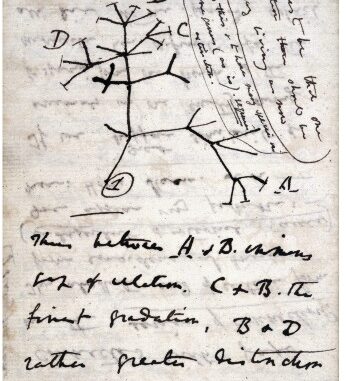
La curiosité est souvent présentée comme un trait négatif (« la curiosité est un vilain défaut »).
Elle est cependant largement répandue dans le règne animal, des humains aux insectes, et
représente donc une stratégie de survie et d’adaptation efficace. Nous allons étudier comment
elle se manifeste chez différentes espèces, et son utilité dans le jeu évolutif du plus apte.
JULIE AUGUSTIN
Ancienne fonction : post-doctorante en écologie comportementale, HUN-REN Centre for Ecological Research, Budapest,
Hongrie
Ancienne fonction : post-doctorante en phytopathologie, CIRAD, Martinique
Ancienne fonction : thèse en écologie comportementale à l’Université de Montréal, Canada, Québec
EXPERIENCES ou CENTRES D’INTERET :
Entomologie, comportement animal, bioacoustique, entomologie médicale, lutte biologique, changements climatiques,
espèces invasives, modélisation, intelligence artificielle
BIBLIOGRAPHIE/SITOGRAPHIE
DISPOSITION DU PUBLIC)
1. Pisula, W. (2009). Curiosity and information seeking in animal and human behavior.
BrownWalker Press, 149.
2. Dall, S. R., Giraldeau, L. A., Olsson, O., McNamara, J. M., & Stephens, D. W. (2005).
Information and its use by animals in evolutionary ecology. Trends in ecology &
evolution, 20(4), 187-193.
3. Kidd, C., & Hayden, B. Y. (2015). The psychology and neuroscience of curiosity. Neuron, 88(3),
449-460.
4. Reader, S. M. (2015). Causes of individual differences in animal exploration and
search. Topics in cognitive science, 7(3), 451-468.
5. Scrivner, C. (2024). 19 Curiosity: A Behavioral Biology Perspective. The Oxford Handbook of
Evolution and the Emotions, 357.
6. Ajuwon, V., Monteiro, T., Schnell, A. K., & Clayton, N. S. (2025). To know or not to know?
Curiosity and the value of prospective information in animals. Learning & Behavior, 53(1),
114-127.
7. Schmidt, K. A., Dall, S. R., & Van Gils, J. A. (2010). The ecology of information: an overview on
the ecological significance of making informed decisions. Oikos, 119(2), 304-316.
8. FitzGibbon, L., Lau, J. K. L., & Murayama, K. (2020). The seductive lure of curiosity:
Information as a motivationally salient reward. Current Opinion in Behavioral Sciences, 35,
21-27.
9. Sih, A., Bell, A., & Johnson, J. C. (2004). Behavioral syndromes: an ecological and evolutionary
overview. Trends in ecology & evolution, 19(7), 372-378.
10. Réale, D., Reader, S. M., Sol, D., McDougall, P. T., & Dingemanse, N. J. (2007). Integrating